Proposing Solutions to Empower Military Spouse Careers
This last month, I wrote a series of LinkedIn articles related to my employment journey and the programs initiated to help military spouses with employment challenges. In Military Spouse Employment: An Overview of a Deep Dive into Challenges and Solutions, I gave you an overview of some of my employment struggles and shared insight from other organizations on how to alleviate the high unemployment rate. My Entrepreneurial Journey reflected on entrepreneurship over the past 22 years, followed by the History of Military Spouse Employment Programs, which examined initiatives like MyCAA and Hiring Our Heroes. Last week, in My Career Journey and Program Experiences, I reflected on my struggles—from early job searches to OCONUS barriers in Belgium—and my experiences with these programs. Today, I want to share some of my proposed solutions to addressing root causes like portable careers, SOFA restrictions, and childcare shortages.
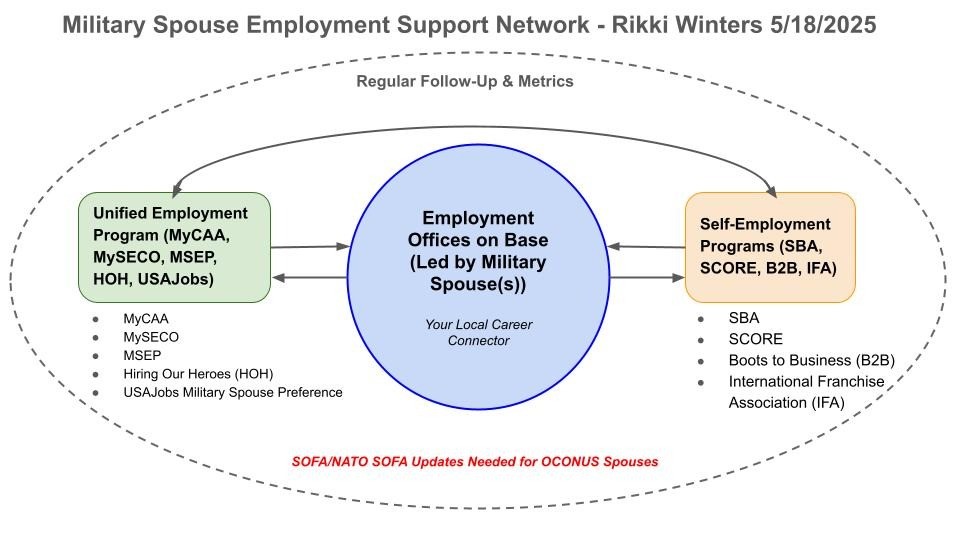
The first issue is that there are too many programs – MyCAA, MySECO, Hiring Our Heroes, and Military Spouse Employment Partnership–MSEP – and it is overwhelming to navigate. A military spouse has to register or create an account in too many places. These programs should be combined into a single, simplified program, reducing the burden of having a profile in multiple locations. This unified program should be housed under the employment offices on base, which would be the central hub, and led by a military spouse(s). A military spouse leader can relate to employment challenges, organize the program with superior efficiency, and advocate with a stronger voice for our needs. By simplifying the programs into one, it encourages better communication between the resources, helping all components work together more effectively.
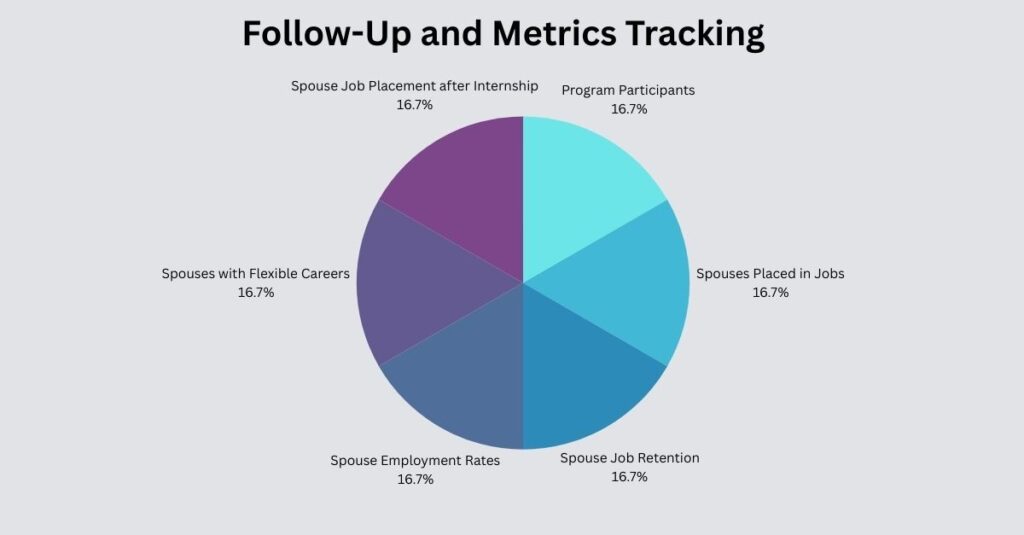
Another key change I am suggesting is regular follow-up, a gap I experienced with MySECO in 2023 when I never received job emails. Follow-up should continue until a spouse says they no longer need help, assessing whether a career remains flexible across moves–like remote or freelance roles–and addressing barriers when they arise. We should track metrics such as program participants, number of spouses placed in jobs, job retention, employment rates, the percentage of spouses in flexible careers, and placements following internships like MSCAP, with public reports to measure success. I know this one is challenging because it involves both the United States government and the host nation to get together, but the updating of SOFA and NATO SOFA is critical. These agreements, in some cases unchanged since originally written, are discriminatory, belittle military spouses, and make the DoD seem unsupportive of families.
Employment offices should connect self-employed military spouses to the SBA, SCORE, Boots to Business, and the International Franchise Association (IFA). This can be done with monthly classes on-site or via virtual webinars. This can also address childcare shortages, a barrier I have heard about. Programs like the Vandenberg Family Child Care Provider program here offer funding for military spouses who want to start in-home childcare centers. Fairs or markets hosted on base to help promote spouse businesses would be another great way to support self-employment avenues.
On the government side, the Work Opportunity Tax Credit, S.1027/H.R.2033, would incentivize hiring, as it does for veterans. The licensing compact act needs to be completed, and STEM fields like engineering lack compacts. Federal hiring should also be the same as it is for Veterans, offering priority points.
Civilian employers need education on our values. Organizations like SHRM are recognizing military spouse hiring, and I would like to see them take a step further. Would SHRM consider annual training for HR managers on the benefits of hiring a military spouse, covering how to employ and retain us? I also support nonprofits making a difference– The Rosie Project assists with IT training and jobs in covered areas. The Society of Military Spouses in STEM (SMSS) supports military spouses pursuing or in the STEM field with networking.
I would love to know your thoughts. Which ideas resonate with you? What ideas do you have? Let’s join voices and share stories to make this change happen.
Originally published on LinkedIn on May 19, 2025. [Read it here]