Lessons from Boots to Business: A Military Spouse’s Perspective on Entrepreneurship
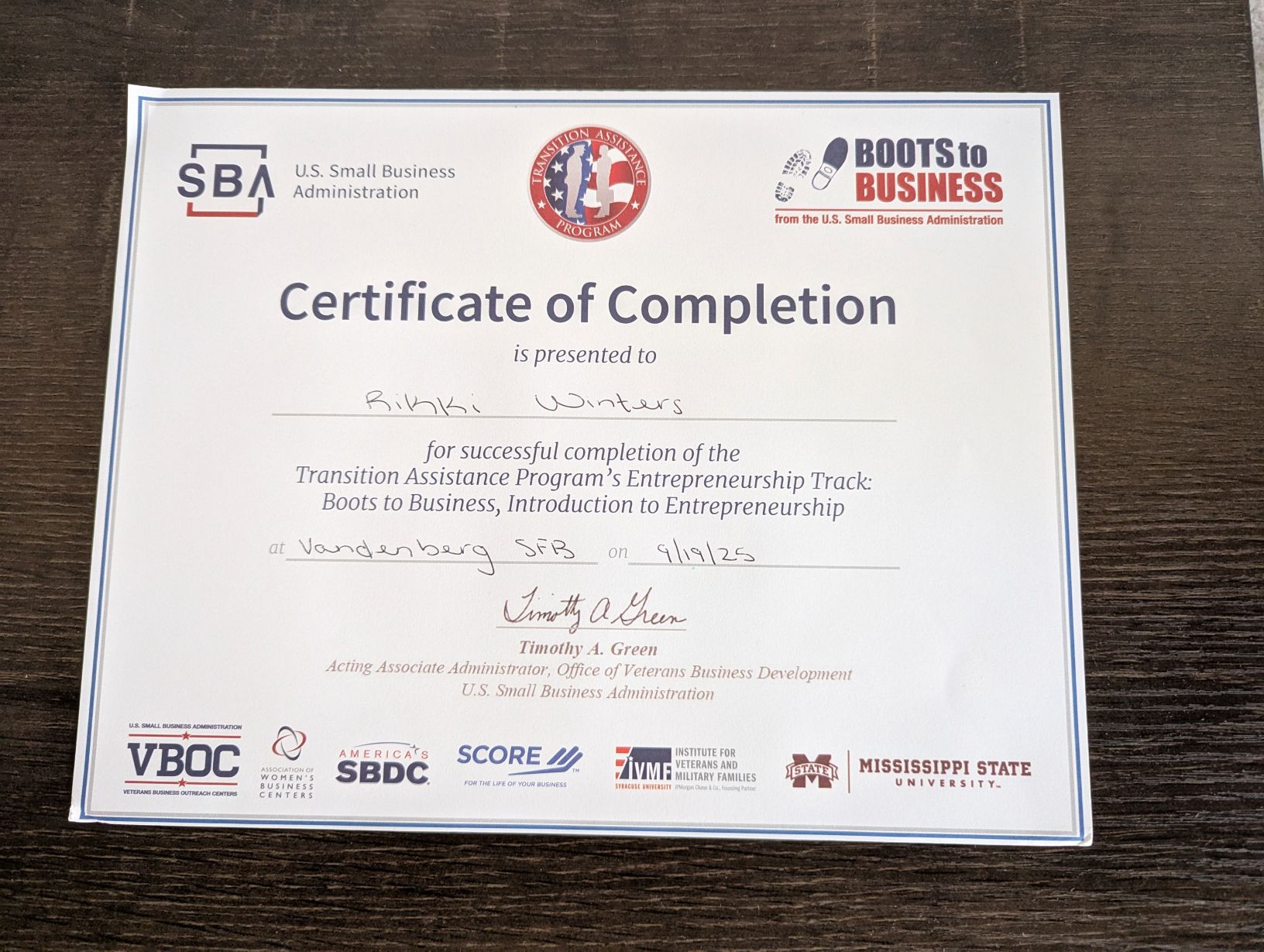
As part of continuing our TAP journey and building on my last article, Navigating the Transition: Our TAP Journey and the Evolution of Veteran Support Programs, I recently had the opportunity to participate in the Boots to Business course offered by the U.S. Small Business Administration (SBA).
This two-day course introduced us to the many aspects of entrepreneurship. Our facilitator, a veteran and business owner currently pursuing his Ph.D. in business, shared insights that blended lived experience with ongoing learning. An SBA representative from the Los Angeles District Office—also a veteran—taught a couple of modules as well. Their enthusiasm, knowledge, and encouragement that “help is available when it feels overwhelming” were refreshing and motivating.
I was the only participant already running a business; most others were just beginning to explore entrepreneurship. The course covered eight modules, full of a plethora of resources and terms that I hadn’t heard of and there were plenty of things I knew about too.
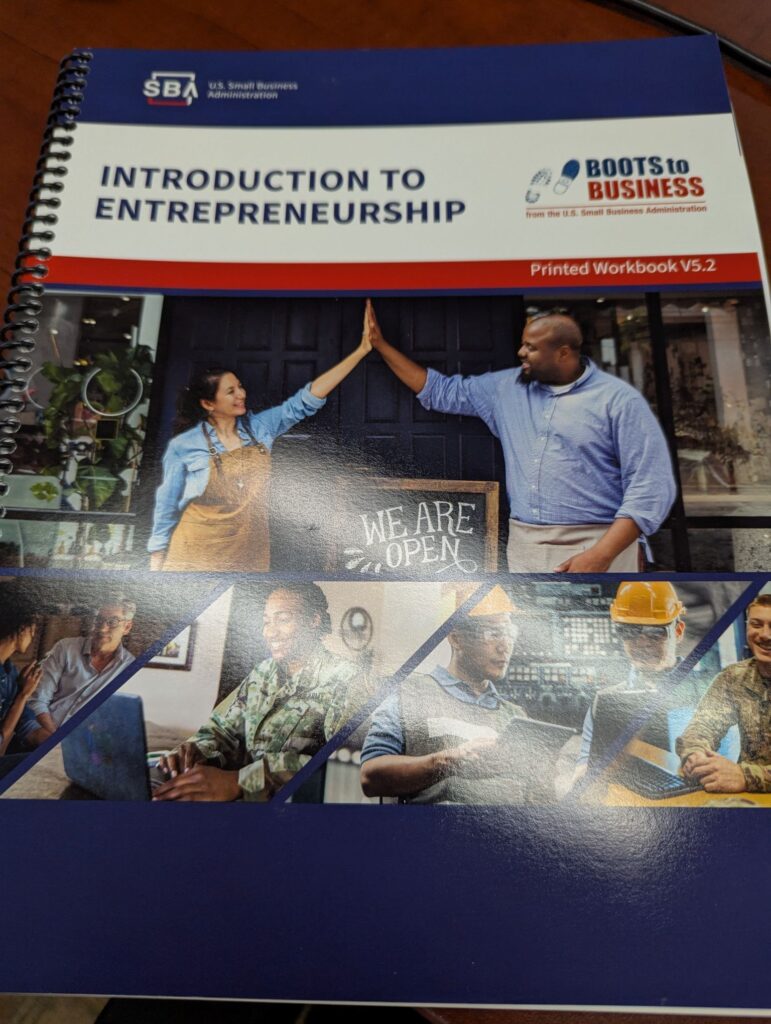
One highlight was working with the Business Model Canvas, which gave me time to refine the highlights of my business offerings. Another concept that stood out was “bootstrapping”—a thrifty, resourceful approach that I realized I already practice by tracking expenses in Google Sheets rather than using paid software.
When we reviewed the Economic Model, our facilitator used a case study to show how businesses adjust pricing. He also reminded us that challenges like imposter syndrome can affect how we value our services. That resonated with me deeply as a military spouse entrepreneur. With a career path full of gaps, I often question whether my skills and services are worth what I charge. The Business Model Canvas helped me visualize my value proposition, which was both affirming and practical.
I was hoping for a deeper dive into intellectual property—especially trademarks, which currently take about five months to process. This is an area I’ll need to keep exploring.
On the financing side, I came away with both general insights and a suggestion tailored to my own situation. Our facilitator noted that opening a line of credit could help strengthen my business’s flexibility. More broadly, I learned that the SBA offers microloans and that even the USDA has entrepreneurial resources—something my husband and I may be able to tap into for future ideas.
The final module focused on resources. After learning about the many programs and services available not only to transitioning service members but also to military spouses, I plan to connect with our local SBA, VBOC, and Small Business Development Center offices. As our facilitator reminded us, our tax dollars fund these resources—we should make the most of them.
For military spouses, the course’s emphasis on bootstrapping and portable skills felt especially relevant. Given frequent relocations and the need for flexible, low-cost business models, entrepreneurship can provide careers that move with us. Entrepreneurship, like my Homefront Hustle, helps build careers that could move with you, though SOFA and NATO SOFA restrictions can impact even entrepreneurial ventures abroad.
I’d love to hear from you: What has been your experience with entrepreneurship resources and programs, whether as a veteran, spouse, or civilian? Which SBA or partner services made the biggest impact for you?
Originally published on LinkedIn on September 22, 2025. [Read it here]